Worshipping the Goddess: Fasting & feasting, worshipping & sharing, dancing & singing… the 10 days and 9 nights of Navratri give us a chance to express our gratitude towards Maa Durga, indulge in lavish meals with our loved ones, dance to the beats of the dandiya and above all reaffirm our faith in the power of the mother, Goddess Durga
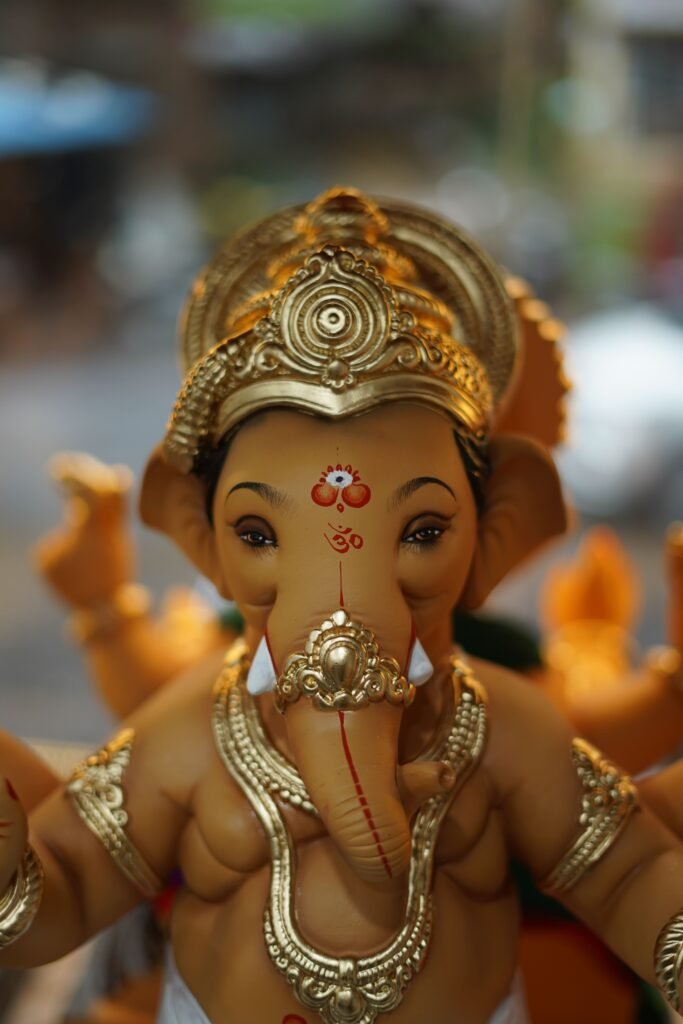
The sounds of Jai Mata Di purifying the air, beautiful idols of Goddess Durga in every nook and corner of our streets, invitations from neighbours to attend the colourful and pious Mata Ki Chowki, lovely sounds of the playing of dandiya sticks, swirls and whirls of stunning ghaghras, aroma of the singhara barfi and aloo halwa… just these words are enough to paint the picture of our country during the festival of Navratri in North India.
Yes, soon it will be that time of the year when one and all will forget their differences and get together for a dandiya or garba session. Join me as I re-visit and wait for the immensely powerful and positive vibrations of Navratri to fill up our lives. In Navratri, we invoke the energy aspect of God in the form of the mother referred to as Durga, which literally means the remover of miseries of life. She is also referred to as Devi (Goddess) or Shakti (energy or power) or Maa/Mata (mother).
Our worship of Shakti re-confirms the scientific theory that energy is imperishable and cannot be created or destroyed. It is always there, always alive, always intact and empowering. I still remember as a kid asking my grandfather why did we call Goddess Durga ‘Maa’ and what he explained to me is still so vivid in my mind. He said, “It’s only a mother who can never refuse what her child asks from/of her.”
And yes, such is the faith in Durga, a faith that is undeterred, strong and eternal. Interestingly, this is one festival that lays emphasis on the supreme qualities of a mother, the creative aspect of the absolute. At this point, I’d like to mention a Sanskrit shloka that reflects the immense belief of the devotees in the power of Maa Durga. “Ya devi sarva bhutesu, shanti rupena sansthita (Goddess who is omnipresent as the personification of universal mother), Ya devi sarva bhutesu, shakti rupena sansthita (The Goddess who is omnipresent as the embodiment of power), Ya devi sarva bhutesu, matra rupena sansthita (The Goddess who is omnipresent as the symbol of peace), Namastasyai, namastasyai, namastasyai, namo namaha (I bow to her, I bow to her, I bow to her again & again!).
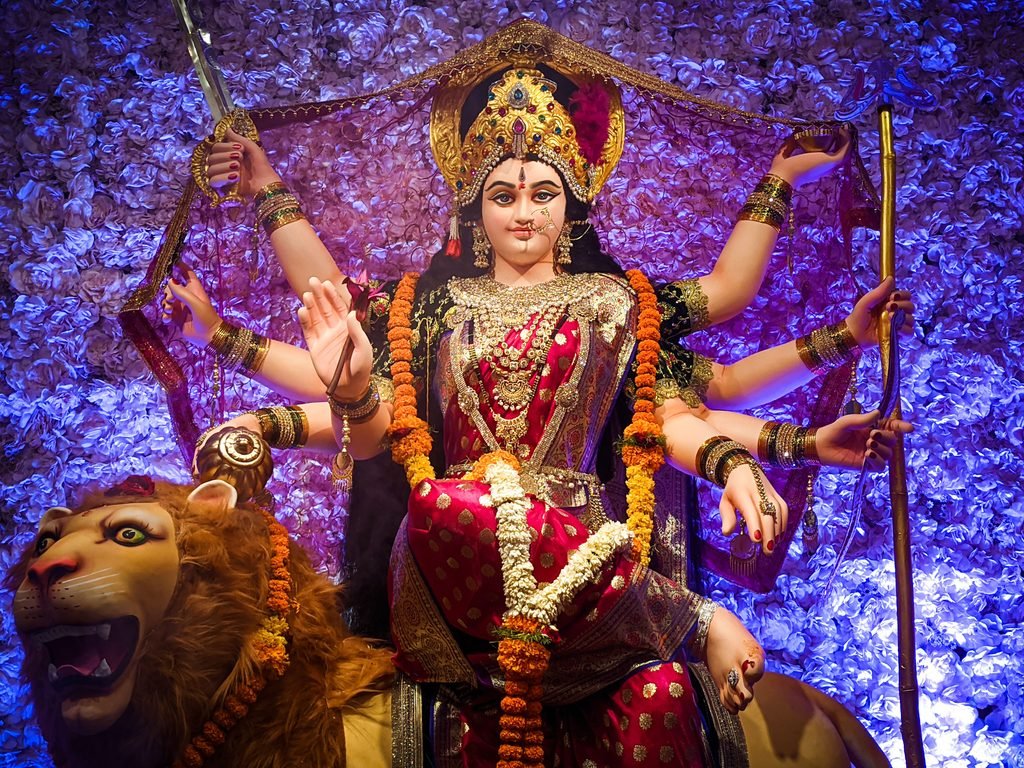
It is this love and faith for Durga that makes the believers celebrate and worship her nine avatars. During the nine nights and ten days of the festival, nine forms or avatars of Shakti are worshipped (To know more, read box). Many devotees fast for all nine days, while others fast in pairs with a family member. Fasting is another way of expressing gratitude and love towards the Maa.
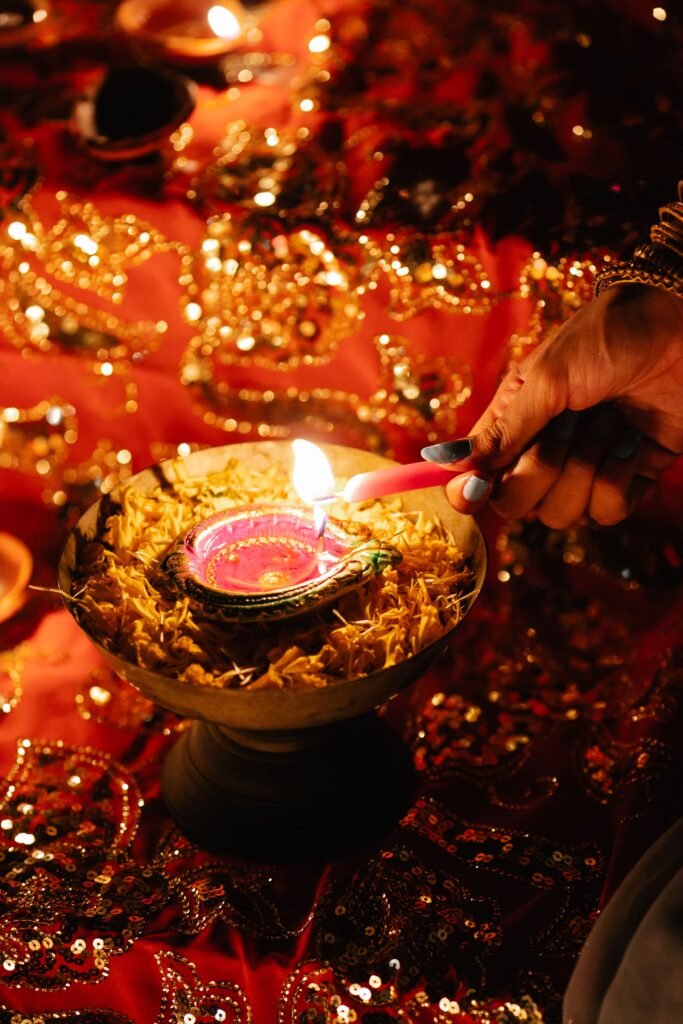
As for me, out of the ten days two days hold a special place, the eighth day known as Ashtami and the tenth day known as Vijayadashmi/Dusshera. On Ashtami, my grandmother used to prepare the Ashtami puja thaali (plate) with incense (dhoop), deepak (earthen lamps with cotton balls dipped in ghee/oil), chunri, flowers, bindi, bangles and prasad to perform the Mahashtami Puja. There was a special bhog prepared on this occasion to offer to the Goddess. I remember how as a child, I along with my friends and cousins, would wait to get our hands on the lavish meal, which comprised kheer, lauki halwa, aaloo halwa and more! The other favourite day involved sitting atop the shoulders of my grandfather and watching the effigy of the Ravana being lit!
My friends from Bihar, Kashmir, Punjab, Uttar Pradesh, Madhya Pradesh and Haryana tell me of the custom that is followed in their households on the eighth or ninth day i.e. worshipping of nine young girls. It is called Kanya Puja and is usually performed on the ninth day, Navami; the girls representing the nine forms of Goddess Durga. The little girls have a good time as their feet are washed and they are adorned with kumkum on their forehead, treated to a lovely meal and given new clothes amongst other gifts. And while the festival is about praying and expressing gratitude towards Maa Durga it is not confined to just that. The popular, colourful and celebratory Dandiya Ras is an event that is organised at many places.
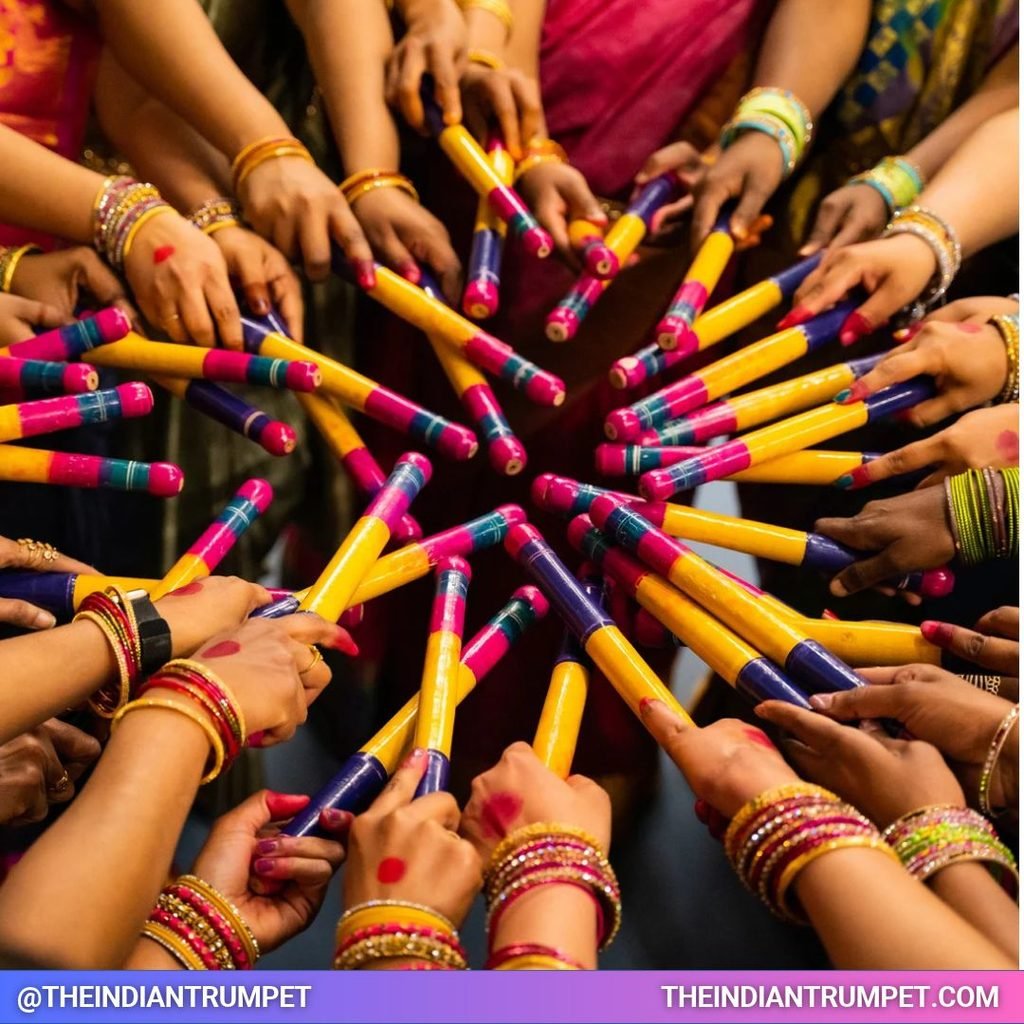
Dandiya or Garba, originating from Gujarat, is an inseparable part of the Navratri and people swing to dandiya beats in traditional attires all through the nine nights. In South India, people set up steps and place dolls and figurines on them. This is known as golu and people visit each other’s house to admire these beautiful displays. I feel that this is one festival that allows us to pray, fast, feast and rejoice at the same time. The shlokas purify the home, aroma of delicacies fills up our hearts and stomachs, diyas bring light to our lives and dandiya raas keeps our spirits high. And at the end each one of us experience divinity, one that sends across a strong message that no matter how strong and tough the evil be there is a power that would shield us and guide us towards the light of knowledge, power and wisdom.