Demystifying the charm of Kesar, Saffron or Zafran. Learning more about the wonders of ‘Red Gold.
The first few images that come to my mind when I think of Kesar (as was Saffron known in our home) are of the Kesar Phirni and the Kesar Pista Kulfis that my mother would make for all of us on special occasions. Biryanis too.
I remember how she had this tiny box that always lay hidden in a cool and dark corner of her cupboard and how she would use it sparingly each time she liked to use it. For me, the way she would bring her index finger and thumb together to take out just a pinch of those deep red threads and then drop the threads into a bowl of warm milk, mixing it gently with her finger so that the threads don’t get crushed, the Kesar then slowly lending its warm redness to the milk and making it a luminous yellow was always a mesmerising sight. Still is. And then there were other occasions like during a pooja where the priest would ask her to prepare a paste of Kesar, uncooked rice and milk, which he would then apply to our foreheads. Or when she would add it to a glass of hot milk and sugar each time I would be down with an occasional cold or flu. Ah and also the times when she would mix it with almond oil and insist I apply it to my face for beautiful skin. “It’s very expensive so always use it carefully”, she would say.
I’d nod still not realising the worth of the spice.
In more recent times, a lot of my friends and family started asking me to get them a little of this prized spice from Dubai, each time I was travelling to India. And I decided to study and find out why Saffron or Zafran as it is known here at Dubai had such a coveted status amongst all spices. And my spice hunt took me to Chef Ankur Chakraborty and Chef Gaurav Singh, ex-chefs at the Indian Bistro called Zafran when they first opened in 2010 at the Dubai Marina Mall.
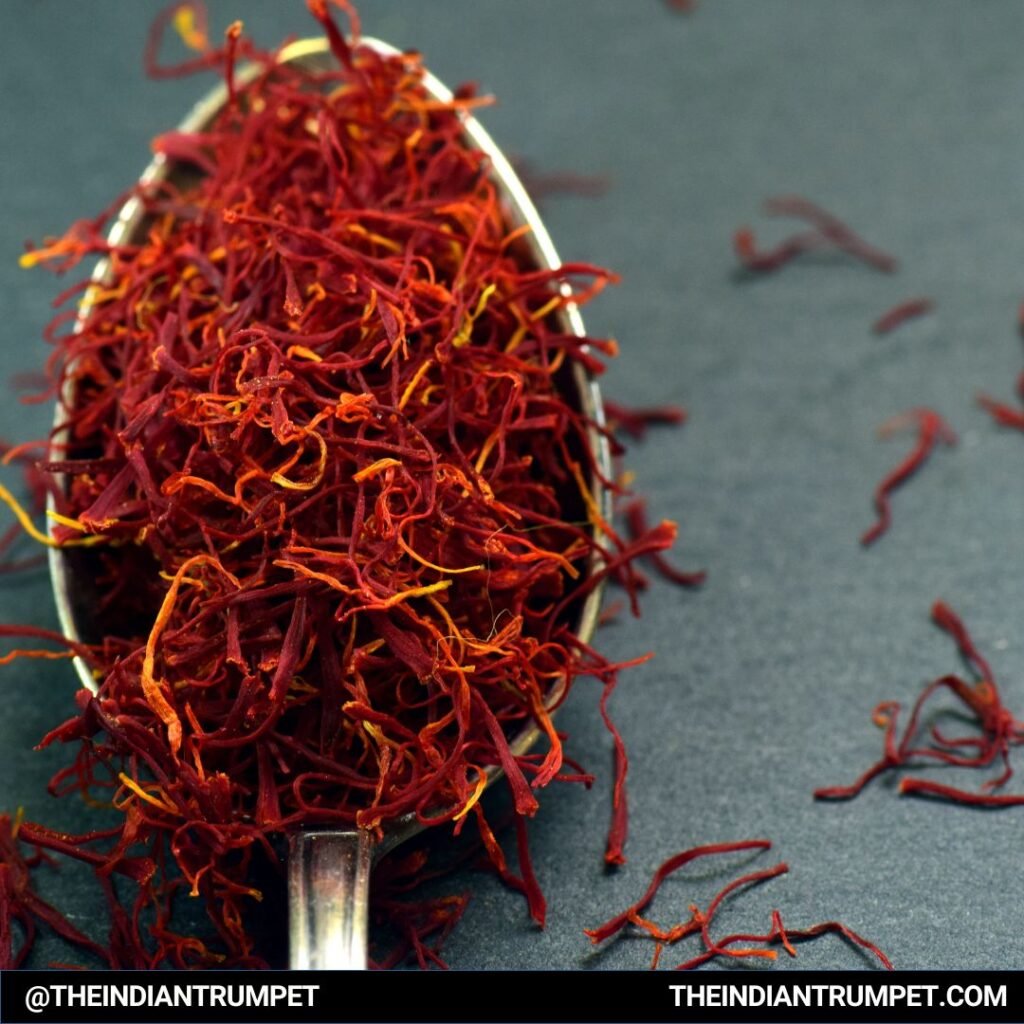
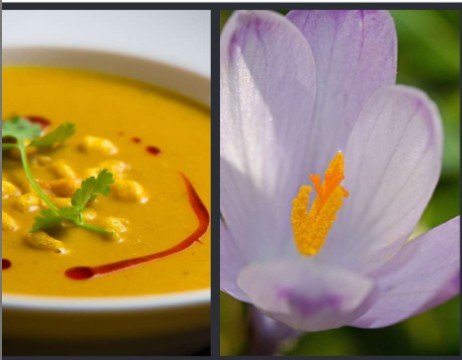
Chef Ankur says, “Saffron threads come from the stamens of the flower, Crocus Sativus Linneus and each flower just produces three stamens that are handpicked. A roomful of these flowers produce only a few grams and that is what makes it so expensive.”
Really! That little!
Later, I check with my well trusted friend ‘Google’ and it tells me that it takes about 190 flowers to produce one gram of saffron. He adds, “Saffron comes from mostly Kashmir, Iran and Spain and is divided into grades based on its measurement of colour, taste and fragrance. Historically, Middle East has always been the hub of spice trade because the geographical location is such that the spice traders can buy the spices and then take it to both the eastern or the western world. A bridge of sorts.
There was a point in time when the monetary value of spices like cardamom, pepper, saffron, etc. was very high. In fact, in history Saffron has frequently costed more than gold per unit of weight. Many times Saffron was substituted for money. So, Saffron would come from Spain, Iran and India to the Middle East and the valuation of the same would be done via auction based on the quality and then the price would be decided, from there it was sold through these merchants across the world.”
Chef Gaurav adds, “Saffron has the ability to transform a dish into an irresistible delicacy, it is the same irresistibility that we try to translate into what we offer, hence the name.” I ask Chef Gaurav about the spice’s inclusion in their food and he says, “Saffron is one spice that blends beautifully both with the savoury and sweet things. At the restaurant Zafran where they worked together, the courses in the menu paid an ode to the spice. Zafran Salad (mixed greens, tandoori chicken with saffron cream dressing and mango chutney), Zafran Fish and Chips (crumb fried fish with coriander and served with saffron chilli mayo), Zafran Malai Tikka (saffron spiced chicken breast, cream cheese and mace marinade) and of course then there are the Biryanis all made with Saffron Basmati rice.
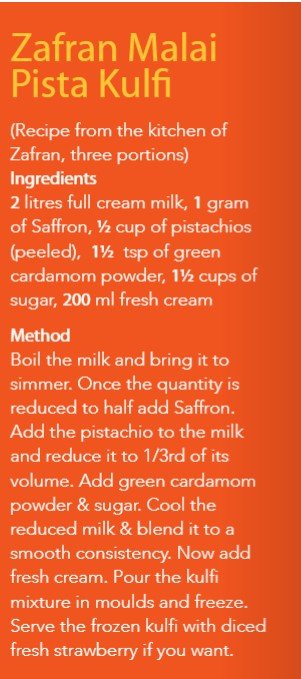
Not to forget the desserts, the Zafran Pistachio Kulfi and Zafran Rasmalai.” ‘No drink with Saffron?’ I joke. “Saffron and Mango Lassi” he smiles.
Chef Ankur warns, “A small pinch of Saffron goes a long way. When used in the right quantity it gives the dish a whole new meaning but the moment you overuse it the dish becomes bitter.”
Chef Gaurav adds, “Also, it is a misconception that one should always buy the most expensive Saffron available.
The best quality of gold is 24 Karats but you can’t make ornaments with it. Likewise it’s not always that best quality of Saffron that will suit your dish. For what are you using it and how you are treating it are the deciding factors. Are you dissolving it in milk or warm water? Are you dry roasting the strands and powdering them or simply drying and leaving them as filaments? Each of these four methods will give you five different colours.” He also tells me that they practice the dilution method and dry roasting on very low heat (after which the threads are crushed with hands to make a fine powder). “Word of caution”, adds Chef Ankur, “Whenever you introduce heat to any spice they release aromatic oils so we suggest you use it immediately. So never buy ground saffron for it loses it flavour much quicker than the threads and also these days fraudulent merchants mix it with turmeric or paprika. “
Which brings me to another important issue i.e. how to recognise authentic Saffron? The chefs tells me that authentic Saffron threads will always be even in size and very fine. Another thing to watch out for is that the yellow bits won’t be connected to the red threads. And of course then there is the distinctive heady and musky smell that you need to look out for.
Chef Gaurav adds, “Also, after eating it should not leave any colour on your hand. Saffron will never give you a dense colour. When fine quality Saffron is added to water, the water will gradually become pale yellow in colour. After some more time the water should turn a deeper and more vivid hue, whereas adulterated Saffron will immediately turn the water a bright yellow.”
I look around and outside the sun has also turned from light amber to bright yellow, which signals that it’s time for the chefs to return to business. I thank them for educating me with facts on ‘red gold’ and for sharing what inspires them and drives them, which I promise to share with you another day. Before I leave I request them to share their prized Kulfi recipe and they agree.
A sweet ending indeed.