PHULKARI – A VIBRANT FORM OF WEARABLE ART – BELONGS TO PUNJAB, NOW SHARED BETWEEN INDIA AND PAKISTAN. THE LAND MAY BE DIVIDED, BUT THE CULTURE LIVES ON ACROSS BORDERS. WE SURVEY THIS COLOURFUL TRADITION.
Almost 13 years ago, in the Autumn/Winter fashion shows, celebrated designer Manish Malhotra based his entire collection around phulkari, thus bringing this ancient, and previously non-commercial art form to national attention. What’s ironic about Manish Malhotra using it in his designs? The Manish Malhotra Label famously revived the craft with his “Threads of Emotions” collection. His hand-embroidered Phulkari pieces have been worn at international events like The Hope Gala in London and exhibited at the Philadelphia Museum of Art.
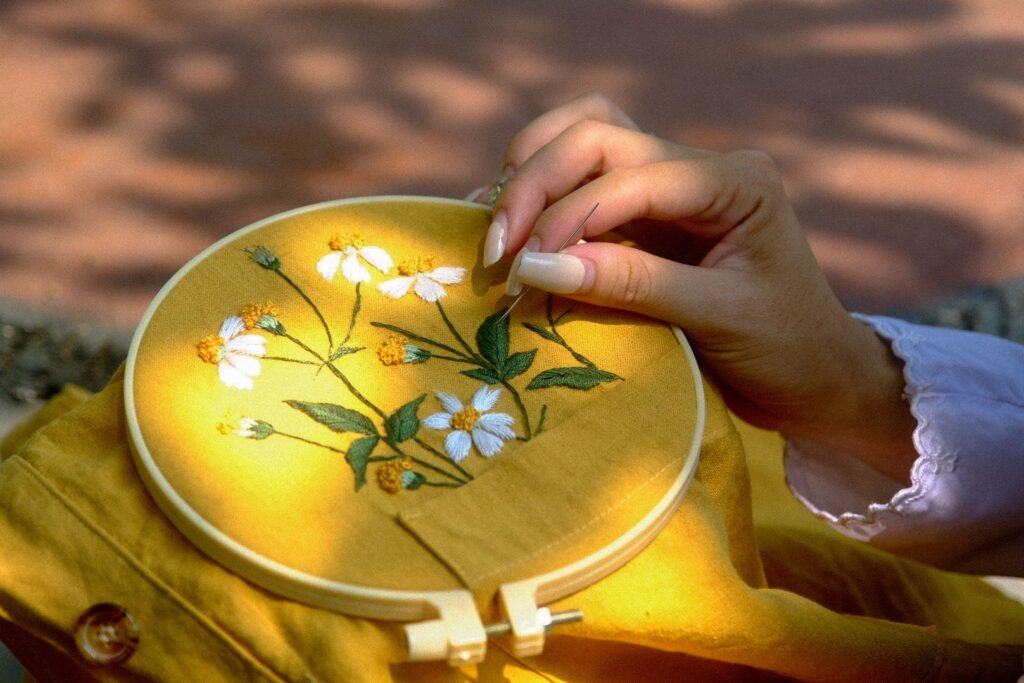
Phul-kaari can be literally translated as ‘flower work’. It’s mentioned in ancient texts like Guru Granth Sahib, which dates it back at least six centuries. Its origins are obscure: some say it started in Iran, where it was known as ‘gulkari’; others say it was introduced to Punjab by migrant Jatts. Whatever its beginnings, it became intricately woven into the daily lives of Punjabi women.
A girl’s trousseau was judged on the number of phulkaris she received as a bride, indicating the status of her family. Family elders would lovingly start creating phulkaris for a girl the moment she was born; as she grew older she would learn the art, and eventually contribute. There were no written instructions or patterns, just knowledge and techniques passed on from one generation to the next.
So, in its heyday, it was possible to identify the origins – family and region – of a piece of phulkari based on its patterns. And here’s the irony: they were made exclusively by women for their personal use in dupattas, shawls, kurtas and jackets. No males were ever involved in the creation of Phulkari, nor were the items ever marketed. And then Mr. Malhotra set about selling them to the fashionistas!
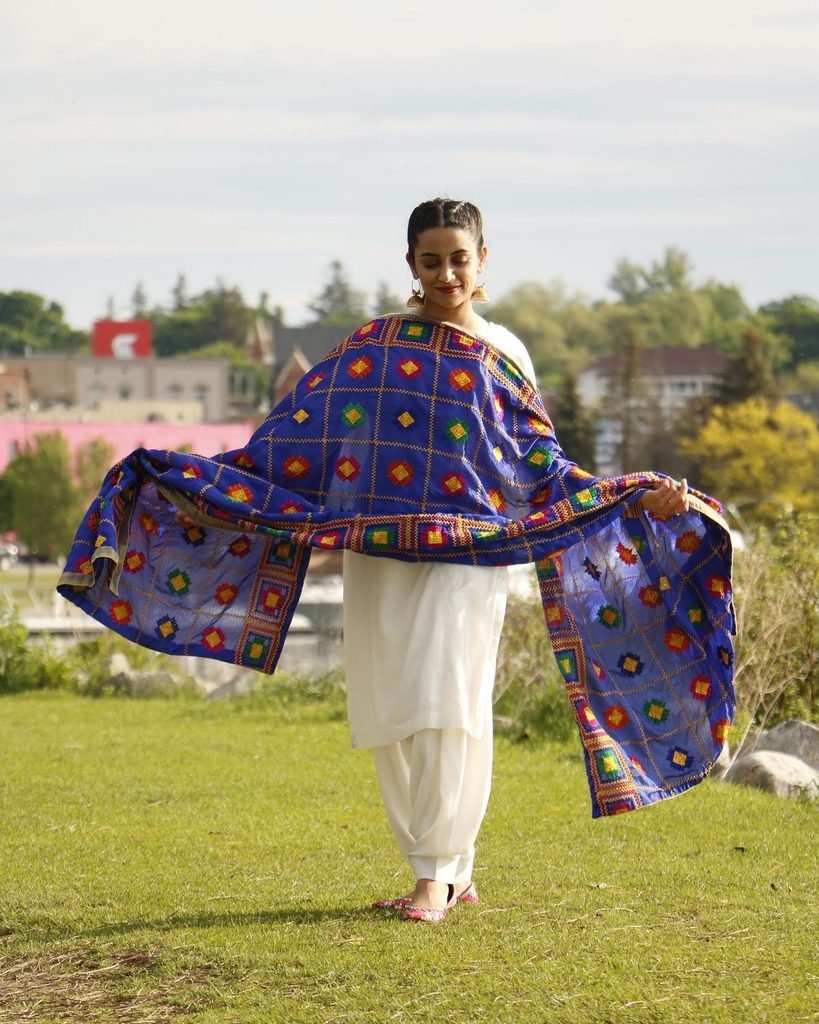
Phulkari used to be worked in hand-spun cotton called ‘Khaddar’ using silk threads known as ‘Pat’ which were tinted with vegetable dyes. The colours of the base cottons were significant. Older women selected white, while younger women chose red, orange, and other, brighter hues. Darning stitch was mostly used, and the smaller the stitch, the higher the quality. Different shades were created by altering the length and direction of stitches giving the work amazing depth and dimension. The motifs were mostly geometric and usually depicted scenes from everyday life.
Phulkari can be divided into 52 different types, but there are broad categories based on the type and density of the stitching:
- Bagh means ‘garden’ and is the most complex type of all. It covers the base cloth entirely, requiring work of the utmost patience and high levels of skill.
- Darshan Dwar means ‘gate through which God can be seen’, and this pattern is used for religious
purposes only. Widely used as a canopy for the Guru Granth Sahib, it’s also offered as a token of gratitude to God after the fulfillment of wishes. - Sainchi phulkari has figurative pieces depicting life in the villages of south eastern Punjab. Local animals (goats, cows, elephants, big cats, scorpions and peacocks) are represented among wrestlers, farmers, weavers and so on. This form of phulkari was restricted to a small region of Punjab and is hence highly coveted by collectors.
- Suber and Chope work is related to weddings and is typically presented to the bride by her maternal relations on her wedding day as a gift.
- Vari-da-bag, gifted to the bride by her in-laws on entering their house, her new home, on her wedding day. This ‘bagh’ was very special since it was gifted by new relatives, while other phulkari would be part of her trousseau.
- Panchranga and Satranga work, done in either 5 or 7 colours, shows the colourful and lively nature of Punjabi life.
- Meenakari Bagh or Ikka Bagh, often made of gold and white pat, this bagh is decorated with
small multicoloured lozenges evoking enamel work (meenakari) or the ‘diamond’ playing card suit. - Nazar Buti features a patch or tiny corner sewn in dark blue or black, or sometimes intentionally left blank to ward off the evil eye.
As times changed, the structure of families and daily routines of life changed too. Industrialisation and education for girls meant there was neither time nor need to make these intricate works of art at home. Eventually, though it didn’t disappear completely, phulkari work started becoming a rarity.
But as the Peter Allen song says, “Everything old is new again!”
Prime among artists still skilled in the requisite embroidery is Lajwanti Devi Chhabra (60) from Patiala, who received a Rashtrapati Award (1995) for her artistry, and efforts at keeping the tradition alive. “I inherited the art from my mother and used to practice it while making things for myself. That’s what most girls in my time did! Gradually westernisation attracted the women of Punjab and they kept abandoning the art. But phulkari was still an important part of a bride’s trousseau. Neighbours and relatives started to approach me to create special pieces for their daughters’ weddings. With time, this turned into a full time venture which keeps me busy and has also played a big role in keeping the tradition alive.”
Lajwanti Devi runs the Guru Nanak Phulkari House in the Tripuri region of Patiala, along with her sons, Amit and Ravinder, and daughters, Lovely and Varsha. It’s very heartwarming to see the younger generation being so passionate about maintaining their heritage. Amit mentions: “This is what our maternal grandmother taught our mother, who taught us, and now even my little niece is learning”. In spite of being government award winners, making this venture financially viable is difficult, with much competition from cheaper, machine made, lower quality products.
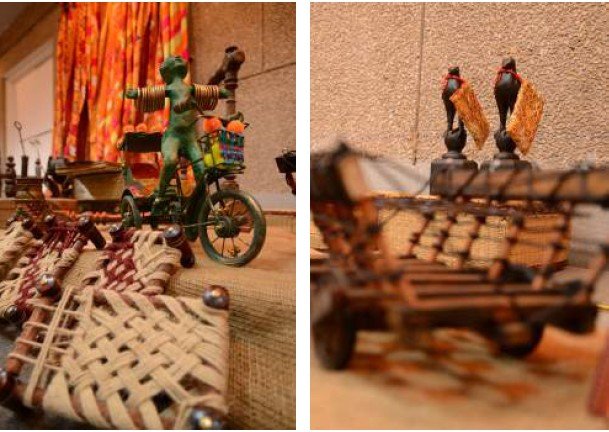
1469, a popular retail brand that promotes Punjabi culture through its products, and Dr. Alka Pande, an art historian and writer, are working collaboratively to make Phulkari art and artisans known. Their exhibition ‘Mela Phulkari’ in Delhi, featured items over 150 years old, some of which belong to the brand 1469, with a few borrowed from the personal collections of royal families, for public viewing.
Through its stores, 1469 has played a pioneering role in establishing Punjab and its artwork in youthful minds. Harinder Singh, the creative force behind 1469, becomes nostalgic recalling days when weddings would be incomplete without ornate phulkari work. It was customary for all married women to wear their choicest phulkari dupattas for all auspicious occasions. The intricate work could even be seen on their batuas or pouches. Singh organised the elaborate exhibition in a bid to bring back that old glory.
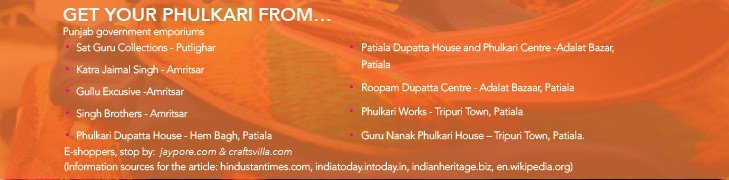
The south-eastern region of Punjab, known as Malwa, is the main hub of Phulkari. Bathinda, Patiala, Rajpura, Zirkpur, Bahadurgarh and Tripuri are among subsidiary regions where this work is still done in households. Although demand for phulkari products is on the rise, the profits mostly go into the pockets of middlemen while hard-working artisans receive a pittance. Lately, NGOs have started to correct this situation by organising sales and making sure artisans make a healthy living from their work. The Punjab government is promoting phulkari through its pan India emporiums.
Gurpreet Singh, former deputy general manager of Phulkari, Chandigarh Punjab Govt. Emporium said, “Our emporiums, pan India, make sure that this art work is promoted in its purest form. We sell only the work selected as per committee directives. We believe in making quality work popular and letting people connect to the artisans through us. Most of our customers are either art patrons or NRIs, but we’re also hoping to attract the younger generation.”
Designer Madhu Sud of Aroma Boutique in Amritsar works with a passion to make phulkari popular. She believes it is the duty of younger generations to further develop this amazing ancestral work. Phulkari pieces, vibrant and versatile, can be used in traditional dupattas, merged into lehengas or Anarkalis, and styled to create stoles, bags, shawls, coats and sarees: the options are endless.
“Eh phulkari meri maa ne kadhi, iss noo ghut ghut jhapiyaan paawan” : “My mother has embroidered this phulkari, I hug it tight again and again with love”. With so much emotion poured into each thread and tiny stitch, this art form is set to survive another five centuries. At least!
Words by: Puja Raina Mahaldar hails from the land of mystic beauty, Kashmir. When she was growing up, she surrounded herself with her father’s medical journals and huge collection of books. She loved to flip through one of her dad’s favourite books in particular, O Jerusalem! Known as a chatter box amongst her friends and family, she loves freelancing for magazines, newspapers, portals and more.