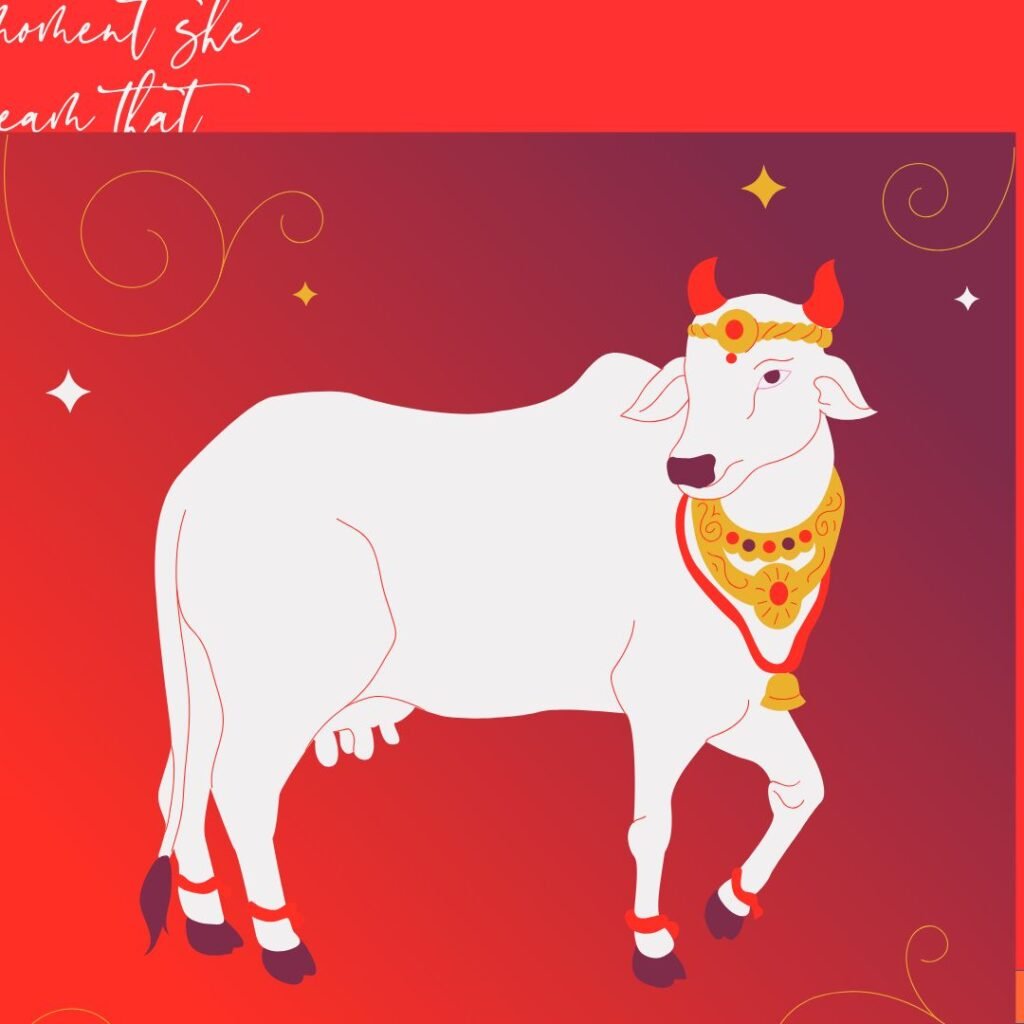
We explore the Kamadhenu or mother of all cows, who is worshipped as the divine wish-fulfilling cow goddess by Hindus: we speak about its iconography, mythological tales and religious connotations.
As per Hindu mythology, Kamadhenu was a divine cow who was believed to be the mother of all cows and could grant any wish of a true seeker. In the Vedas, cows represent wealth and a joyous earthly life. From the Rig Veda, we read “The cows have come and have brought us good fortune. In our stalls, contented, may they stay! May they bring forth calves for us, many-coloured, giving milk for Indra each day. You make, O cows, the thin man sleek; to the unlovely you bring beauty. Rejoice our homestead with pleasant lowing. In our assemblies we laud your vigour.” [Source: wikipedia]
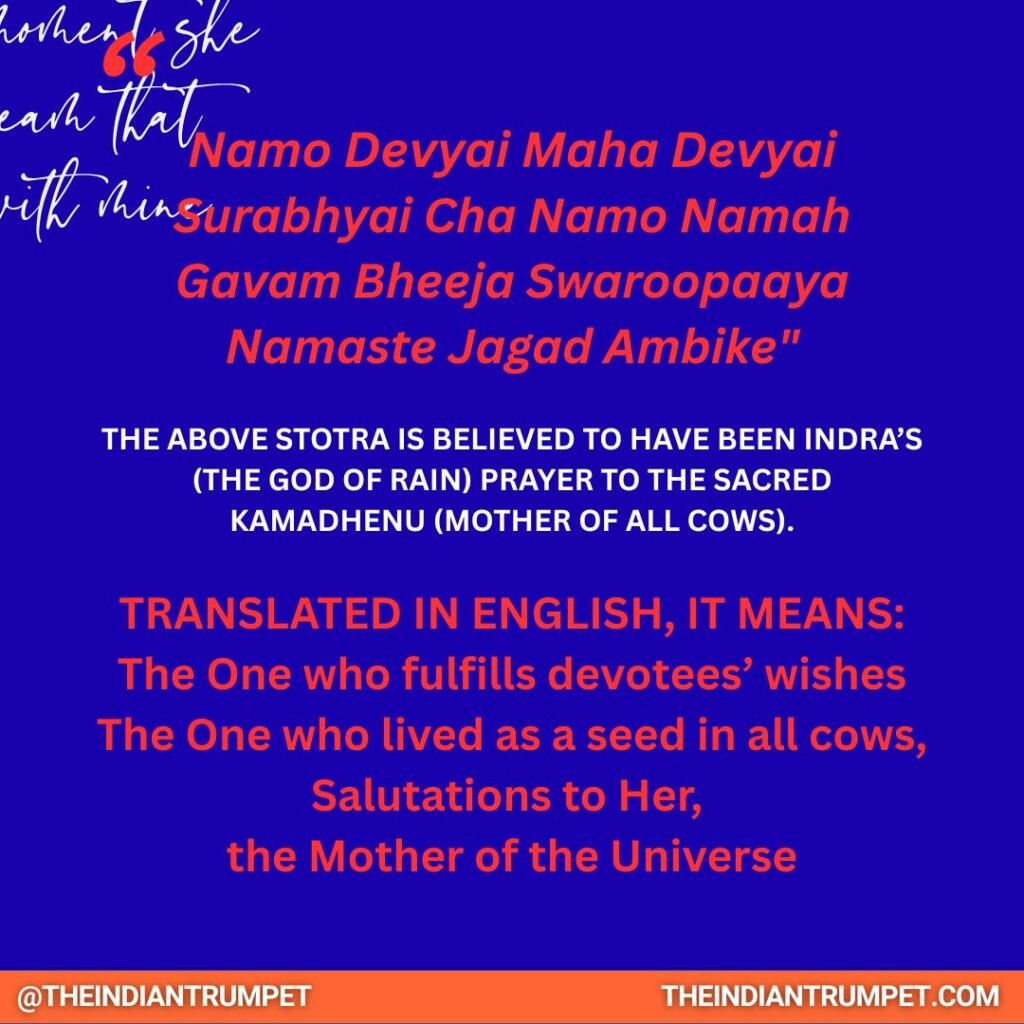
This miraculous cow of plenty, also known as a “wish cow” lives in swargalok (heaven) and is said to have emerged from ksheerasagar (ocean of milk) at the time of samudramanthan (the great churning of the ocean by the gods).
It was presented to the seven sages by the gods, and came into the possession of Sage Vasishta in the course of time. Lord Krishna in Bhagavad- Gita states: “dhenunam asmi kamadhuk dhenunam”, which translates “Among cows, I am the wish-fulfilling cow”. Kamadhenu is usually portrayed as a cow with a female head and breasts. Sometimes, she is also shown as a spotlessly white cow, containing several deities within her physical structure. Kamadhenu, the “cow of desires,” has a bovine body, a female head, polychromatic wings like a tropical bird, and a peacock’s tail.
A cow is said to be the abode of all the gods, wherein every atom in her body serves as a dwelling for the 33 crore gods in Hinduism. The 14 mythical worlds are said to exist in the limbs of a cow. The spiritual significance of the cow is apparent in the use of milk, butter, and ghee in ritual ceremonies. Kamadhenu is regarded by Hindus as the source of prosperity and abundance; as a devi herself. She is also related to Prithvi (Mother Earth), who too is sometimes described as the serene, all enduring cow. To Hindus, the cow also represents purity, fertility, the ability to sustain human life and a selfless, sacrificing nature.
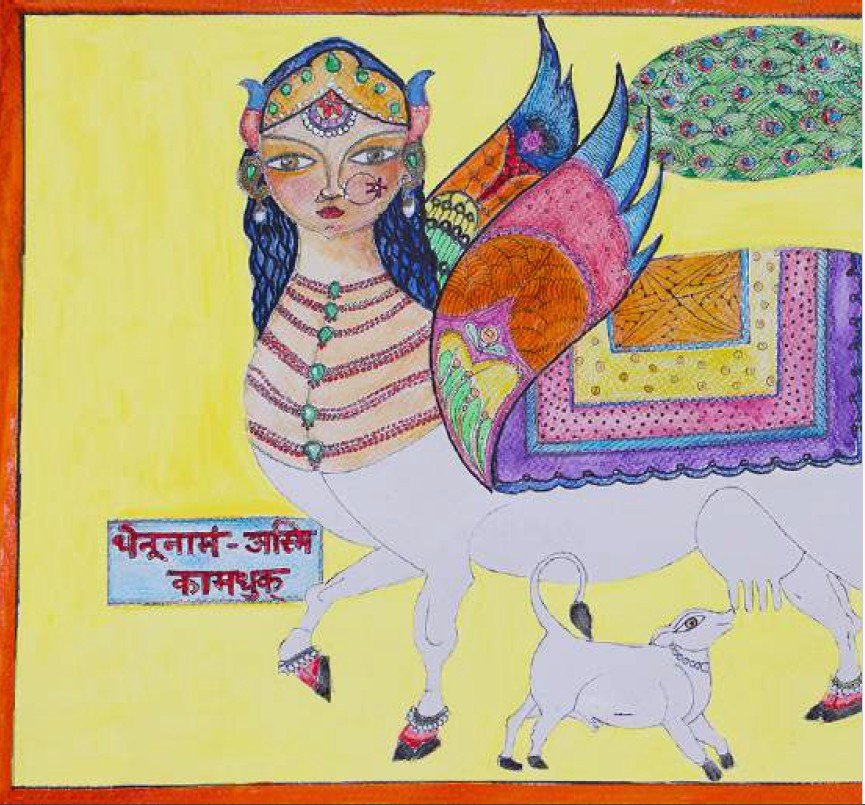
Kamadhenu’s complexion can be described as that of white clouds – clear and soft. Every part of her body bears a religious significance – her four legs embody the four Vedas and are considered to be as strong and enduring as the Himalayas; its teats represent the four Purusharthas (blueprint for human fulfillment); her horns symbolise the Divine Trinity of Brahma at the tip, Vishnu on the middle part and Shiva at the base of the horn; while the sun and moon gods reside in her eyes, Agni (god of fire) and Vayu (god of wind) reside in her shoulders. Therefore, it is strongly believed that all the major deities exist in Kamadhenu, and hence represented such in portraits.
Kamadhenu has never been venerated as an independent deity, nor does she have any temple exclusively dedicated to her. Hindus believe that the most effective way to worship Kamadhenu is to worship and respect all cows in general. Hence, cows are revered by being fed outside temples, especially on Fridays as well as on all special occasions and festivals.
The panchagavya (five products) of the cow — milk, curd, ghee, butter, urine and dung — are all used in a puja (worship) as well as in rites of extreme penance. The milk of the family cow nourishes children as they grow up, and gobar (cow dung) serves as a major source of energy for households throughout India. Cow dung is sometimes used as an ingredient while preparing the tilak (a ritual mark) on the forehead. So, do you wish to have a blissful life? Then, go ahead and worship the “wish cow”!